Provided by the Interactive HPC Consortium
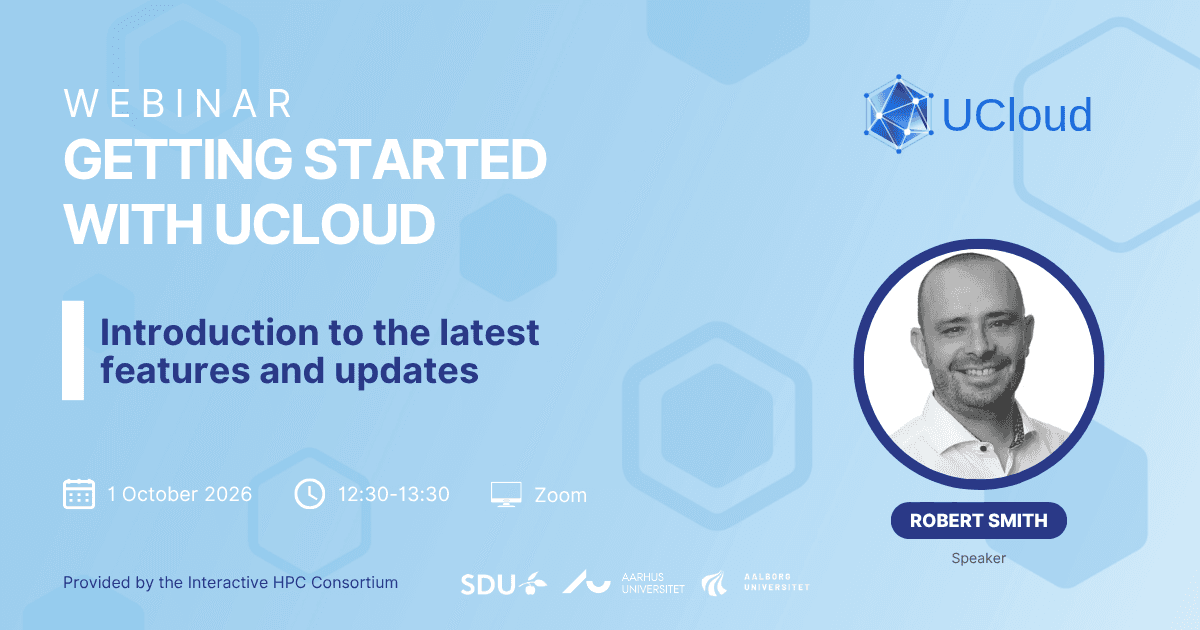
Introduction - Getting Started With UCloud
01.10.2026 12:30 - 13:30

All researchers across disciplene

English

Online
Provided by the Interactive HPC Consortium
Introduction - Getting Started With UCloud
01.10.2026 12:30 - 13:30
All researchers across disciplene
English
Online
Whether you are new to UCloud or already using the platform, this webinar will help you navigate the platform, manage your projects and data, and make the most of the available applications.
In this session, you will learn how to:
- Navigate the new UCloud interface and access your projects and resources.
- Manage files and drives – create and organise project drives, upload and share data.
- Explore the application catalogue and run applications on UCloud.
- Understand the available compute resources and learn how to select the resources that best fit your research needs.
Target audience: Researchers, both new and existing UCloud users across all disciplines who want to get started with UCloud or learn more about the platform’s latest updates and features.
Technical level: Beginner to Intermediate. No prior experience with UCloud is required.
This webinar is provided by the Interactive HPC Consortium, which consists of Aalborg University, Aarhus University, and the University of Southern Denmark (SDU). CLAAUDIA represents Aalborg University in the consortium and serves as the local support team for UCloud. Questions regarding the webinar, as well as requests for access to and support with the UCloud platform, can be directed to CLAAUDIA.